Three to four weeks with gel. Four to six weeks without. Those are the honest defaults. What follows is why they move, and how to work out which end of the range you are on.
If you wear gel: three to four weeks
People often assume they should rebook when the coating starts failing. In practice, a well-applied gel manicure does not fail at three weeks — it just stops looking right, and there is a structural reason to rebook before it does.
The regrowth line. As the nail grows, the coated section moves forward and the balance point of the nail shifts. A rigid coating sitting further out on a nail that flexes at the base puts stress at that junction, and that is where breaks start. Rebooking at three to four weeks is mostly about avoiding this rather than about appearance.
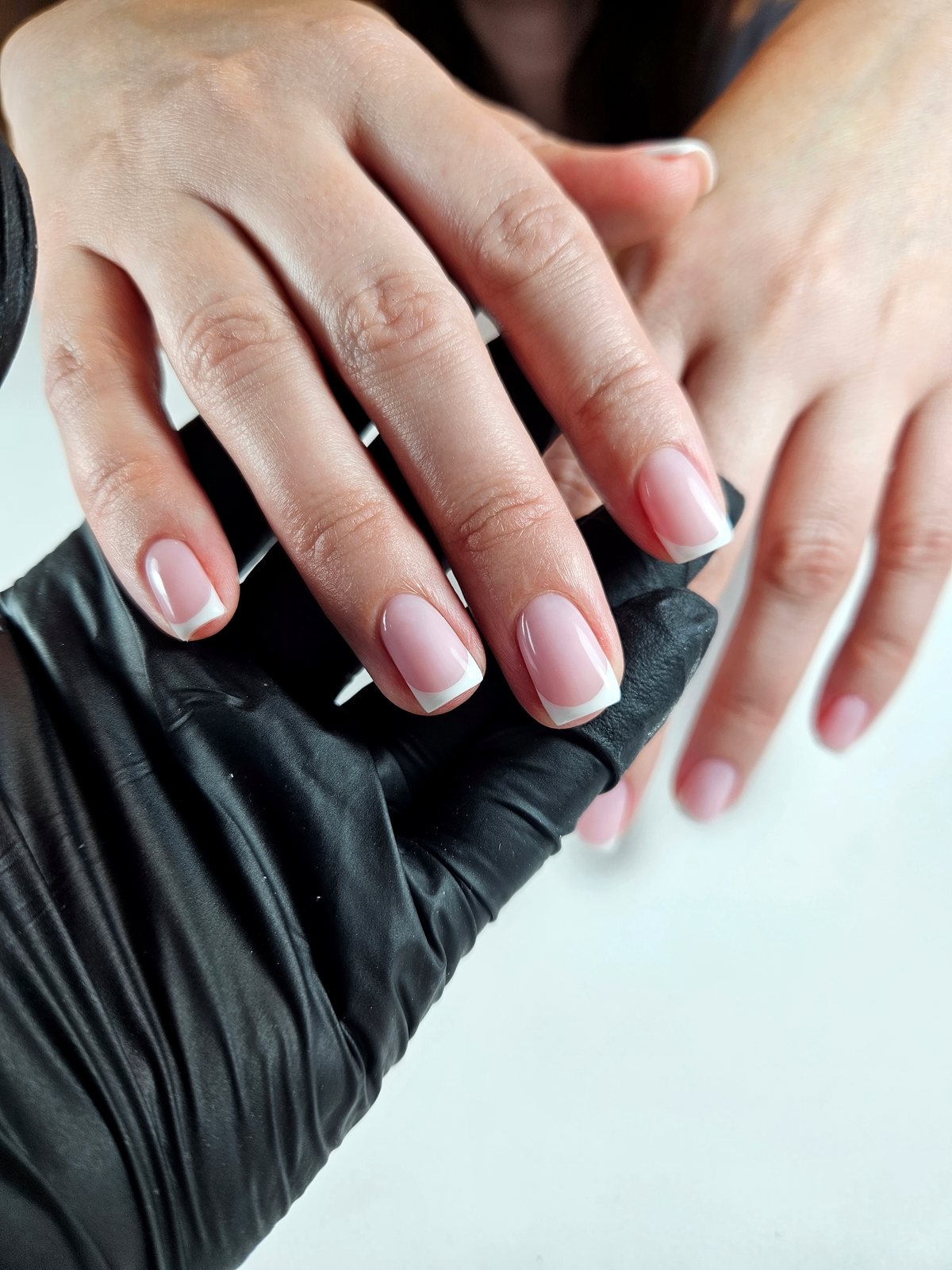
The visual cue is simpler: once you can clearly see the gap at the cuticle, you are at the point where most people rebook. On a French line or a design, that gap becomes obvious sooner than on a solid colour, so those sets often go on a slightly shorter cycle for purely aesthetic reasons.
If you do not wear coating: four to six weeks
Without gel there is no coating failing, so the timing is driven by the cuticle. Pterygium regrows continuously and, left long enough, hangnails start appearing at the sidewalls.
The test: if you are catching a nail fold on fabric, or picking at loose skin at the sides, it is due. If nothing is catching, you can wait.
What shortens the interval
- Hands in water frequently. Washing up, cleaning, anything with repeated hot water and detergent. This is the biggest single variable for coating longevity.
- Manual work, gym, climbing, guitar. Mechanical stress at the free edge and callus at the sidewalls.
- Fast nail growth. Genuinely varies between people, and grows faster in warm weather.
- Very short nails. Counter-intuitive, but a short nail shows the regrowth gap as a larger proportion of visible plate.
- Sea and pool exposure. Salt and chlorine are drying to the nail fold, which affects the seal at the base.
What lengthens it
- Cuticle oil daily. The single most effective habit. A hydrated nail fold is flexible, which means less lifting at the base and fewer hangnails.
- Gloves for washing up. Usually worth several extra days on its own.
- Slightly shorter length. Less leverage against the free edge, fewer breaks.
- Solid colour over French or design. Regrowth is far less visible.
Signs you have left it too long
- Any lifting at the cuticle — this one should not wait, because once water gets underneath it stops being cosmetic
- Hangnails appearing at the sidewalls
- A nail that has started to split or peel at the free edge
- Coating that has become noticeably thicker at the tip than the base as it grows out
Can you go too often?
With coating, yes — but the issue is removal rather than frequency. Every removal cycle carries some risk to the plate, and doing it weekly multiplies that. If you want to change colour more often than every three weeks, you are better served by regular polish than by repeated gel removal.
Cuticle work is different. Having it done more frequently than roughly every three weeks means there is very little tissue to remove, so the technician works closer to living skin than necessary. That leaves the area tender.
A rebooking habit that helps
Book the next appointment before you leave. Not for the studio's benefit — because the alternative is noticing the gap at week four, discovering nothing is available until week six, and spending a fortnight with a set past its useful life. That is the point at which most people start picking at it, which is where the actual damage happens.
Frequently asked questions
How often should I get a gel manicure?
Every three to four weeks. The reason is structural rather than cosmetic: as the nail grows, a rigid coating sitting further out puts stress at the regrowth line, and that is where breaks start.
How often if I do not wear coating?
Four to six weeks. Without gel the timing is driven by cuticle regrowth. If you are catching a nail fold on fabric or picking at loose skin at the sides, it is due.
Can I get a manicure too often?
Cuticle work more frequently than about every three weeks means there is little tissue to remove, so the technician works closer to living skin than necessary and the area ends up tender. With gel, the concern is repeated removal rather than frequency.
Why does my gel look worn out before three weeks?
Usually frequent hot water and detergent, which breaks the seal at the base, or preparation that was rushed at application. Gloves for washing up and daily cuticle oil are the two habits that make the most difference.
If you are breaking nails or losing coatings faster than you think you should, that is usually fixable. Describe what is happening and I will tell you what is likely causing it.
Ask about your nailsService details and prices: Manicure in Alicante — prices and booking